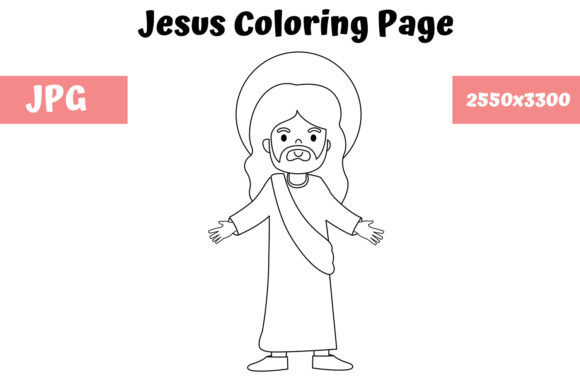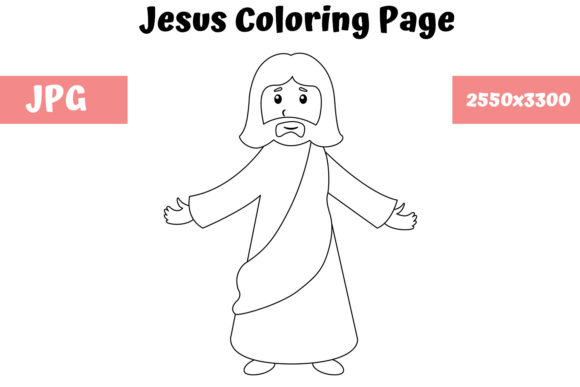
Jesus Coloring Pages for Kids
Jesus coloring pages for kids offer a surprisingly versatile resource that goes far beyond simple Sunday morning entertainment. Whether you are a parent looking for quiet time activities, a children's ministry coordinator planning a lesson, a teacher integrating art into religious education, or a small business owner creating faith-based products, these pages can serve as a meaningful creative tool. The combination of familiar biblical imagery with the open-ended nature of coloring invites children to engage visually with stories they may already know while also giving adults a framework to guide discussion, reflection, or even design work.
At their core, these coloring pages depict scenes from the life of Jesus: his birth, teachings, miracles, parables, and interactions with people. What makes them particularly useful is their ability to bridge different learning styles. A child who may not absorb a spoken lesson as easily can connect with a visual representation of the Good Shepherd or the feeding of the five thousand. For the adult preparing the page, the challenge lies in choosing or adapting illustrations that are clear, age-appropriate, and aesthetically engaging enough to hold a child's attention from outline to finished piece.
Creative Applications Beyond the Crayon Box
Jesus coloring pages for kids can be integrated into a wide range of projects and settings. Consider these practical ways to expand their use:
- Storytelling prompts: Instead of handing a page with instructions to simply color, use the illustration as a visual aid while you tell the corresponding Bible story. Pause at key moments and ask the child what they think a character might be feeling or what happens next. The coloring process becomes a natural time for processing the narrative.
- Sequencing activities: Print multiple pages that show different events from Jesus' life—the nativity, the calling of the disciples, the Last Supper, the resurrection. Have children arrange them in chronological order. This works well in small groups at home or in a classroom, encouraging both collaboration and recall.
- Customizable greeting cards: Fold a coloring page in half and use the front panel as the card face. Children can color the image, write a message inside, and give it to a family member, friend, or church volunteer. This turns a simple activity into a personalized gift that carries both creative effort and heartfelt intention.
- Bulletin board or wall displays: A collection of finished pages creates a vibrant gallery. For a church hallway or a homeschool corner, you can group pages by theme—such as parables, miracles, or journeys—and label them. This builds a visual reference that children can revisit and feel proud of.
- Quiet bags for worship services: Many congregations offer activity bags to keep young children engaged during longer services. Including a Jesus coloring page along with a few crayons or colored pencils provides a calm, focused activity that aligns with the setting rather than distracting from it.
Each of these ideas shifts the coloring page from a passive time-filler to an active component of learning, worship, or connection. The key is to think about the context in which the page will be used and what outcome you want to support.
Adapting Pages for Different Audiences and Goals
Not every Jesus coloring page for kids suits every situation. The age and attention span of the child, the setting, and the learning objective all influence what works best. Here is how to approach adaptation for different needs:
Young Children (Preschool to Early Elementary)
Keep illustrations simple with thick, unbroken lines and large open areas. Avoid cluttered backgrounds or too many small details. Scenes like "Jesus with children" or "Jesus walking" work well because they contain familiar human forms and minimal extra elements. Since younger children often color outside the lines and prefer broad strokes, a page with generous white space helps them feel successful rather than frustrated. You can also print pages on slightly heavier paper to withstand enthusiastic coloring and erasing if using pencils.
Older Children (Upper Elementary and Middle School)
Introduce more detailed illustrations that challenge fine motor skills and allow for nuanced color choices. Pages depicting parables, the Last Supper, or scenes with multiple figures encourage older children to think about composition and shading. They may also enjoy adding their own background elements—drawing a landscape, adding animals, or writing a short verse at the bottom. For this age group, consider providing a small set of suggested color palettes or asking them to choose colors based on mood or meaning rather than strictly realism.
Classroom or Group Settings
When using Jesus coloring pages for kids in a group, consistency helps. Choose a unified style—for example, all pages from the same artist or series—so the finished collection has visual cohesion. Prepare a few extra copies of each page to account for mistakes or second attempts. If the group is large, assign different pages to different children and then have them present their finished work, explaining what scene they colored and what they noticed while working. This turns a solo activity into a shared learning experience.
Digital or Printable Products
If you are creating content for sale or distribution online, ensure your Jesus coloring pages for kids have clean, high-resolution line art. Test them at various print sizes to confirm details remain crisp. Consider offering both a standard PDF and a version with a small border or margin for easier framing or hole-punching. For digital coloring on tablets, simplify lines further and avoid extremely thin strokes that might not register well on a screen. Adding a blank page with lined space for journaling or note-taking can increase the perceived value, especially for parents or educators looking for a complete activity package.
Practical Tips for Clear and Effective Results
Creating or selecting a Jesus coloring page for kids that actually works in real use involves attention to a few practical details:
- Line weight and clarity: Lines should be thick enough to be visible after printing, but not so heavy that they overwhelm the drawing. Aim for a consistent stroke that defines shapes without crowding.
- Biblical accuracy with age-appropriate simplification: While you want the scene to be recognizable, avoid adding too many historical or architectural details that confuse younger children. A simple depiction of a boat on the Sea of Galilee can carry the story of Jesus calming the storm just as well as a highly detailed illustration.
- Paper choice matters: Standard printer paper works for crayons and colored pencils, but markers bleed through easily. If you expect marker use, print on cardstock or a heavier weight paper. For bulk printing, look for paper that is bright white to make colors pop.
- Margins and bleed area: Leave at least a quarter-inch margin around the artwork so that the image is not cut off by the printer or when trimming. If you are binding pages into a booklet or pad, increase the inner margin further.
- Test before you commit: Print one copy and actually color it yourself before distributing or selling. This simple check reveals any line issues, awkward gaps, or elements that do not read clearly once filled in.
These details may seem small, but they directly affect how enjoyable and frustration-free the experience is for both the child and the adult supervising the activity. When a page prints well and the design is thoughtful, the creative process flows naturally.
Originality and Audience-Friendly Design
In a market filled with generic coloring books, producing Jesus coloring pages for kids that feel fresh and intentional requires a clear creative direction. Avoid simply copying common motifs without considering composition or readability. Instead, think about what moment or message you want to highlight and how the layout supports that. For example, a page showing Jesus healing a blind person might place the figures close together with a clear hand gesture, leaving space around them so the action is easy to interpret. In contrast, a page with the birth of Jesus might benefit from a stable, centered composition that gives equal visual weight to Mary, Joseph, and the child.
For adults using these pages with children, the best approach is to stay flexible. Let a child choose a color that seems unexpected—a purple donkey, a blue sky with green clouds—and use that as a conversation starter. The goal is not to produce a historically accurate reproduction of first-century Judea, but to help a child feel connected to the story through their own creative choices. When you treat the coloring page as a launchpad for imagination and discussion rather than a strict assignment, the experience becomes richer for everyone involved.
If you are designing or curating these pages for a specific audience, listen to that audience. Ask parents what scenes their children gravitate toward. Ask Sunday school teachers which pages generate the most conversation. Ask children themselves what they wish was included. Their feedback will guide you toward illustrations that are not only beautiful on the page but genuinely useful in real-world use. That feedback loop is what separates generic content from content that people reach for again and again.
Jesus coloring pages for kids hold a unique place at the intersection of art, faith, and education. Handled thoughtfully, they become more than a quiet activity. They become a way for children to see, to ask, and to remember—one crayon stroke at a time.