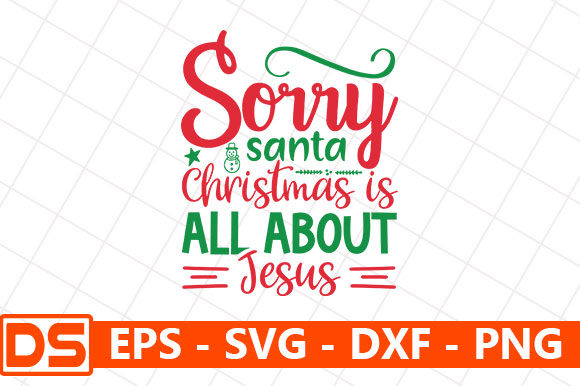
Sorry Santa Christmas Is All About Jesus
Every December, we find ourselves pulled between competing narratives. The glitter of holiday sales, the rush of gift lists, the familiar songs about reindeer and sleigh bells—and then there is the quieter, older story that started it all. The phrase Sorry Santa Christmas Is All About Jesus has become a shorthand for refocusing the holiday on its original center. For many people, it is not an anti-Santa statement but a prioritization tool—a way to decide where time, energy, and resources go during a season that often feels like a blur of obligations.
If you are a small business owner planning your December marketing, a parent deciding how to shape your family’s traditions, a creator producing content for the holiday season, or a professional trying to maintain your own sense of meaning amid deadlines and parties, this concept offers a practical anchor. It is not about rejecting cultural traditions; it is about making deliberate choices about what you emphasize, teach, and carry forward.
What Sorry Santa Christmas Is All About Jesus Really Means
At its core, this idea is a message filter. It asks a simple question: does this activity, purchase, or message point toward the Christmas story as told in the Gospels, or does it point toward a secularized version of the holiday? This is not a binary judgment. Instead, it is a lens for evaluation. When you are planning a holiday email campaign, selecting a church program theme, writing a blog post, or even decorating your home, the question helps you clarify your intent.
Where does it fit in a broader process? Think of it as a mission statement for the season. Before you map out your December calendar, before you approve the budget for your holiday event, before you write the first line of your newsletter, you decide on a central message. Everything else then becomes an expression or a support for that message. This is not a vague concept; it is a strategic starting point that affects every downstream decision.
Planning Your Content and Messaging
For bloggers, educators, and creators who produce seasonal content, the period from October to November is when editorial calendars take shape. If you adopt the mindset that Sorry Santa Christmas Is All About Jesus, your planning phase changes. Instead of asking “what feels festive,” you ask “what conveys the meaning of the nativity in a way that resonates with my audience?” This shifts your keyword research, your topic selection, and your tone.
For example, a Christian educator planning a children’s curriculum might start with the biblical narrative and then decide which cultural elements (giving gifts, singing carols, gathering with family) can be used as teaching tools rather than distractions. The planning process becomes a series of intentional choices: which songs to include, which stories to emphasize, which activities reinforce the central message. This is not about eliminating everything secular; it is about ensuring that the secular supports the sacred rather than replacing it.
Preparing Your Team or Family
If you lead a team at work or a household at home, the pre-season window is the time to communicate your focus. A children’s ministry director might have a meeting with volunteers in November to explain the theme for December. A business owner might send an internal memo about the company’s holiday messaging values. A parent might sit down with their partner and decide together what traditions they want to prioritize. The concept functions as a shared reference point. It is easier to say “remember, we are centering everything on Jesus this year” than to argue about every individual decision later.
In Content Creation and Marketing
During December itself, the challenge is execution. Every piece of content you produce—whether a social media post, a podcast episode, a product description, or a newsletter—either reinforces your central message or dilutes it. If your chosen focus is that Sorry Santa Christmas Is All About Jesus, then each piece of content should be traceable back to that anchor. This does not mean every post must quote scripture, but it does mean that the underlying reason for the season should be evident.
Practical implementation tips for creators and marketers:
- Audit your scheduled content against a simple test: does this piece point toward or away from the nativity story? If it points away, consider adjusting the angle or the imagery.
- Use storytelling that connects cultural traditions to their historical roots. A post about the history of gift-giving can lead back to the Magi rather than remaining generic.
- Include clear calls to action that align with your message. Instead of “buy now for the best gifts,” try “discover the story behind the season” or “share what Christmas means to your family.”
In Events and Gatherings
For event planners, pastors, and community leaders, the season is filled with logistics. A Christmas program, a family gathering, a workplace celebration—each event can be designed to reflect the central message. This might mean structuring the evening so that there is a moment of reading from the Gospels, or choosing music that includes traditional carols alongside contemporary favorites. It could also mean being transparent with attendees about the focus of the event. When people know what to expect, they engage more meaningfully.
In Personal Routines
On a personal level, integrating this concept means making daily decisions about where you invest your attention. If you are a professional juggling end-of-year deadlines and holiday social events, the message can act as a grounding practice. Before you check your email first thing in the morning, spend two minutes reflecting on the reason for the season. Before you attend a holiday party, remind yourself that your presence there is an extension of the same message—you are bringing the light of the season into that space. This is not about perfection; it is about orientation.
Evaluating What Worked
Once January arrives, most people move on quickly. However, the post-season period is when you can evaluate whether your focus actually shaped your outcomes. If you used Sorry Santa Christmas Is All About Jesus as your guiding principle, ask yourself: Did my content perform differently? Did my family or team feel more connected to the meaning of the season? Did I personally feel less stressed because I had a clear priority?
This evaluation feeds into the next year. You can document what worked, what felt forced, and what resonated with your audience or loved ones. Over time, this creates a feedback loop that makes your implementation more natural and effective.
Building Long-Term Traditions
The concept is not limited to a single December. It can become a framework that you revisit each year. Families that adopt this approach often find that their traditions evolve. Maybe you start by reading the Christmas story on Christmas morning. A few years later, your children ask to act it out. Eventually, your teenagers help plan the family celebration around that core narrative. The same trajectory applies to a business or ministry: the first year you experiment with messaging, the second year you refine it, and by the third year you have a recognizable voice that your audience trusts during the holiday season.
Collaborating with Vendors and Partners
If you run a business or church that works with outside vendors—printers, graphic designers, musicians, caterers—communicating your focus early prevents misalignment. A designer who understands your message can choose imagery that reinforces it. A musician who knows your emphasis can select songs that match the tone. The concept becomes a creative brief that every collaborator can refer to.
Combining with Existing Methodologies
This idea does not exist in a vacuum. It works alongside other planning systems you may already use. For instance, if you follow a content marketing framework like the pillar-cluster model, the central message becomes your pillar content, and every article, video, or social post becomes a cluster that supports it. If you use a project management tool like Trello or Asana, you can create a board specifically for holiday content and label each card with how it connects to the central message. The concept enhances your existing workflow rather than replacing it.
Navigating Different Perspectives
One practical challenge is that not everyone in your family, team, or audience shares your conviction. The phrase Sorry Santa Christmas Is All About Jesus can sound exclusive to some ears. A wise implementation acknowledges this without being apologetic. You can say, “This is the focus that guides my decisions this season. I respect that others may choose differently, but here is why this matters to me.” This approach maintains clarity while preserving relationships. In a business context, you can emphasize the cultural and historical aspects of the nativity story without assuming shared faith. The narrative can be presented as a foundational story of Western culture, a source of enduring art and music, and a tradition worth understanding on its own terms.
For Content Creators and Bloggers
- Create a dedicated category or tag on your website for Christmas content that centers on the nativity. This helps with SEO and gives your audience a clear path to find what they are looking for.
- Repurpose old content that already aligns with the message. Update statistics, refresh the images, and re-share it as part of your seasonal content plan.
- Use evergreen formats like listicles and how-to guides but infuse them with your central theme. “10 Ways to Keep Jesus at the Center of Your Christmas Morning” is a searchable, shareable topic.
For Small Business Owners
- Align your product descriptions with the season’s meaning. If you sell gifts, connect the act of giving to the original gift of the nativity.
- Include a short note about the meaning of Christmas in your email signature or on your website’s seasonal landing page.
- Consider donating a portion of December sales to a cause that reflects the values of the nativity story. This gives customers a tangible way to participate in your message.
For Educators and Parents
- Use the concept to evaluate media consumption. Before watching a Christmas movie or reading a picture book, ask whether it reinforces or obscures the central story.
- Create a simple family liturgy for the month: read one passage from the Gospel accounts each evening. This takes less than five minutes but builds a shared rhythm.
- Involve children in planning. Let them help choose which decorations or activities connect to the nativity story. Their engagement will be deeper when they have agency.
Preparation and Consistency
The most common failure mode is deciding on a focus but not integrating it into daily decisions. A written plan—even a single page that states your core message and lists three ways you will express it—increases the likelihood that you will follow through. Consistency is more important than intensity. A small, daily practice (such as reading a nativity passage or sharing one social post per week) outlasts a single grand gesture.
Quality Control and Alignment
Whether you are producing content, planning events, or shaping family traditions, quality control means checking every element against your stated focus. This does not mean everything has to be explicitly religious. It means nothing should actively contradict or distract from the core message. For example, a children’s Christmas party can include games and treats, but if the entire event is structured around Santa with no mention of the nativity, it is not aligned. Quality control is about proportion and emphasis.
Long-Term Use and Adaptability
A framework that works for one year may need tweaking the next. Your audience changes, your family grows, your business evolves. The key is to keep the central message stable while allowing the methods of expression to shift. The phrase Sorry Santa Christmas Is All About Jesus is not a rigid slogan; it is a reminder that you have permission to prioritize what matters most. As you gain experience, you will find natural ways to adapt it to new circumstances without losing its essence.
Final Observations on Process and Outcome
When you bring intentionality to Christmas, you reclaim the season from the sense of drift that so many people describe. The process of deciding what you stand for, communicating it clearly, and aligning your actions with that conviction is the same whether you are running a marketing campaign, teaching a classroom, or raising a family. The specific message that Sorry Santa Christmas Is All About Jesus encapsulates is a choice that has been made by countless people across centuries. What makes it powerful in your own context is not the phrase itself but the disciplined practice of letting that choice shape your workflow, your relationships, and your attention.
By treating this as a practical decision-making tool rather than a theological debate, you can implement it in ways that feel authentic and sustainable. You are not required to eliminate every cultural tradition or to alienate people who see the season differently. You are simply choosing a center and building everything else around it. That is a process any professional, creator, or parent can adopt—and one that makes the season not only quieter but also richer.