The Christian Cross Silhouette: Symbolism, Design, and Cultural Resonance
The Christian Cross Silhouette is one of the most immediately recognized visual forms in the world. Stripped of internal detail, color, and texture, the silhouette distills the cross to its purest geometric essence. This reduction is not a loss—it is an amplification. When we encounter a cross rendered only as a dark shape against a lighter background, we are engaging with a symbol that has been refined across centuries, carrying theological weight, artistic significance, and cultural memory simultaneously.
For designers, educators, clergy, and historians alike, the silhouette of the cross offers a unique entry point into conversations about faith, identity, and visual communication. Unlike a fully rendered crucifix or an ornate processional cross, the silhouette demands interpretation. It invites the viewer to complete the image, to supply the meaning from their own understanding. This openness is precisely what makes the Christian Cross Silhouette so versatile in both sacred and secular settings.
The Visual Grammar of the Cross Silhouette
Understanding why the silhouette works so powerfully begins with the basics of visual perception. A silhouette removes everything except the outline. In the case of the cross, that outline is defined by two intersecting lines: a vertical beam and a horizontal beam. The proportions of these beams vary across traditions, and those variations carry distinct connotations.
Proportions and Their Implications
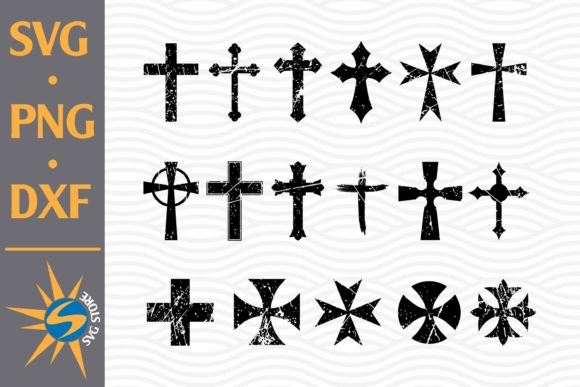
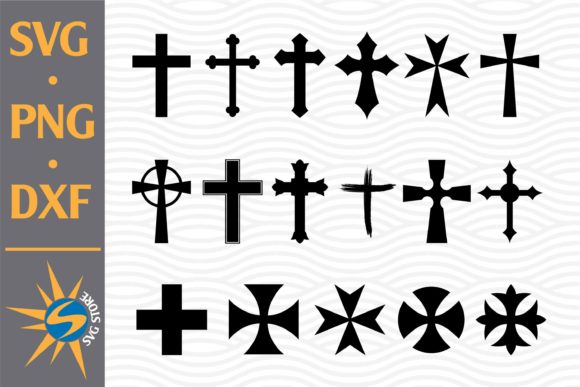
The Latin cross, with its longer vertical shaft and shorter horizontal arm, is the most common form seen in silhouettes. When rendered as a silhouette, the extended vertical draws the eye upward, creating a sense of aspiration, transcendence, or even tension. The Christian Cross Silhouette in this form often appears on hilltops, in cemetery markers, and atop church spires, where its vertical emphasis connects the earthly horizon to the sky.
In contrast, the Greek cross features arms of equal length. As a silhouette, this form feels balanced, contained, and symmetrical. It is frequently used in architectural elements, floor plans, and liturgical textiles. The silhouette of a Greek cross communicates stability and completeness, making it a favorite in logo design and branding for organizations that wish to convey tradition without overt evangelism.
The Celtic cross silhouette introduces a ring around the intersection, adding complexity to the outline. This variation gives the silhouette a circular counterpoint to the straight lines, introducing themes of eternity and continuity. When used in signage or public art, the Celtic cross silhouette often signals heritage and cultural identity as much as religious affiliation.
Applications Across Contexts
The Christian Cross Silhouette appears in environments far beyond the church. Its adaptability makes it a practical tool for communicators who need a recognizable symbol that works across media, scales, and audiences.
Architecture and Urban Planning
In architecture, the silhouette of a cross is often the most visible element of a religious building. From a distance, the shape of a steeple or the outline of a roof ridge can read as a cross long before any detail is visible. Architects working on chapels, memorials, and retreat centers frequently design with the silhouette in mind. They consider how the building will appear at dusk, in fog, or from a highway. In these cases, the Christian Cross Silhouette becomes a landmark, orienting both the faithful and the curious.
Urban planners and landscape architects also incorporate cross silhouettes into public parks, meditative gardens, and memorial plazas. Here the silhouette is often constructed from metal, stone, or living hedges. The shadow cast by such structures changes with the time of day, creating an ever-shifting presence that invites reflection without requiring explicit religious language.
Brand Identity and Commercial Design
Businesses, nonprofits, and religious organizations alike use the Christian Cross Silhouette in logos and marketing materials. For a faith-based nonprofit, a simple cross silhouette communicates mission and values instantly. It avoids the complexity of a detailed crucifix, which might be too specifically Catholic or Orthodox for a broad audience. The silhouette is ecumenical by nature. It gestures toward the shared symbol while leaving room for individual interpretation.
In the world of publishing, the cross silhouette is a staple of book covers, especially in theology, spirituality, and history. Designers often pair it with minimalist typography or abstract backgrounds to signal serious content. The silhouette works equally well in digital formats, where it must be legible at small sizes on mobile screens. A well-crafted Christian Cross Silhouette can be scaled down to a favicon or up to a billboard without losing clarity.
Personal and Funeral Art
For individuals, the cross silhouette appears in jewelry, tattoos, and memorial markers. In these intimate contexts, the simplicity of the silhouette often carries deeply personal meaning. A silhouette cross on a headstone might mark a grave without specifying denomination. It serves as a universal sign of Christian faith while remaining understated enough to feel respectful. Tattoo artists frequently work with cross silhouettes because the clean lines hold up well over time, and the open form allows for integration with other elements like flowers, names, or dates.
Practical Considerations for Creators
If you are a designer, educator, or content creator working with the Christian Cross Silhouette, several practical factors will influence your results. Understanding these variables helps you choose the right version of the silhouette for your specific purpose.
Scale and Legibility
The silhouette must be readable at the intended viewing distance. A cross intended for a highway sign needs thicker beams and wider proportions than one intended for a business card. At very small sizes, the arms of the cross can become indistinguishable from the vertical shaft, especially in digital rendering. Testing the silhouette at actual use size is essential. The Christian Cross Silhouette with slightly flared ends or a subtle taper often retains legibility better than one with perfectly uniform strokes.
Cultural and Regional Variations
Your audience will bring their own visual expectations to the silhouette. In Eastern Orthodox contexts, the three-bar cross silhouette carries specific theological meanings that differ from the Latin or Greek forms. In Ethiopian Christian traditions, the cross silhouette is often more intricate, with repeating geometric patterns that remain visible even in outline. Using a silhouette that respects the tradition of your intended audience demonstrates cultural awareness and prevents unintended offense.
Material and Medium
The same silhouette behaves differently in different materials. A laser-cut steel cross will have crisp, sharp edges, while a wrought iron silhouette will show signs of the smith's hammer. In digital media, anti-aliasing can soften the edges of a cross silhouette, changing its feel. When printing, the thickness of the paper or the opacity of the ink affects how the silhouette is perceived. Always consider how the medium will translate the outline you have designed.
Historical Evolution of the Cross Silhouette
The early Christian community did not openly use the cross as a symbol. It was only after the Edict of Milan that the cross began to appear in Christian art. The earliest depictions were not realistic but symbolic, often reduced to simple outlines. These early silhouettes were carved into tombs, painted in catacombs, and inscribed on personal objects. The silhouette was a form of visual shorthand, recognizable to initiates but unobtrusive to outsiders.
During the medieval period, the Christian Cross Silhouette became more standardized, appearing in illuminated manuscripts, heraldry, and church furnishings. The silhouette form was especially important for pilgrims and travelers. A cross silhouette carved into a wayside shrine or painted on a door told the traveler that shelter and worship were available. This practical use of the silhouette as a sign of hospitality persists today in the signage of many Christian retreat centers and hostels.
The Reformation brought new attention to the simplicity of the cross. Many Protestant traditions favored the empty cross over the crucifix, and the silhouette became a natural expression of that preference. Without the figure of Christ, the cross silhouette emphasizes the Resurrection—the empty cross as a sign of victory rather than suffering. This theological distinction continues to influence how different communities use and perceive the silhouette.
The Silhouette as a Pedagogical Tool
Educators in religious studies, art history, and design often use the Christian Cross Silhouette as a teaching device. For students learning about symbolism, the silhouette provides a clear example of how meaning is carried by shape alone. A simple exercise involves showing students a series of cross silhouettes from different traditions and asking them to identify what each variation communicates. The Latin cross suggests sacrifice and redemption. The Greek cross suggests universality and balance. The Tau cross, shaped like the letter T, suggests humility and Franciscan spirituality.
This kind of visual analysis builds skills in critical thinking and cultural literacy. It also demonstrates that religious symbols are not static. The Christian Cross Silhouette has changed over time and across regions, adapting to the needs of the communities that use it. Teaching this history helps students understand that symbols are living things, shaped by the people who craft and interpret them.
Considerations for Business Owners and Marketers
If you operate a business that serves a faith-based audience, using the Christian Cross Silhouette in your branding can build immediate trust and recognition. However, this decision requires care. A cross silhouette that is too ornate may feel exclusive or traditionalist. One that is too minimalist may feel hollow or commercial. Testing your silhouette with your target audience is wise. The goal is to create a symbol that feels authentic to the values of your organization while remaining accessible to those you wish to serve.
In product design, the cross silhouette appears on everything from candles and clothing to home décor and digital apps. The key is integration. A cross silhouette that feels added as an afterthought will not resonate. One that is thoughtfully incorporated into the overall design—through negative space, material choice, or structural form—will feel meaningful. Consumers are skilled at detecting authenticity. The Christian Cross Silhouette used well can deepen their connection to your product. Used poorly, it can feel exploitative.
Observations on the Future of the Silhouette
As digital communication continues to evolve, the Christian Cross Silhouette will likely find new expressions in virtual and augmented reality. Already, churches and religious organizations are experimenting with digital signage that uses cross silhouettes as interactive portals. A silhouette on a screen might link to a live service, a prayer request form, or a donation page. The silhouette becomes not just a symbol but an interface.
At the same time, the handmade cross silhouette—carved in wood, forged in metal, or planted in a garden—continues to hold deep appeal. In an age of digital abundance, the physical silhouette offers something tangible and lasting. The tension between digital and physical uses of the Christian Cross Silhouette is itself a rich subject for designers and theologians to explore. Both forms have value, and both will continue to shape how people encounter the cross.
For researchers and hobbyists, the study of cross silhouettes offers a window into broader patterns of visual culture. By examining how the silhouette has been used in different eras and regions, we can trace changes in theology, art, and social practice. The silhouette is a document of faith made visible. It records not only what people believed but how they chose to show those beliefs to the world.
The Christian Cross Silhouette endures because it is both specific and open. It points to a particular story while inviting each viewer to find their own place within that story. Whether you encounter it on a hilltop, a screen, a pendant, or a page, the silhouette asks you to look, to remember, and to respond. That is the power of a shape that has been stripped down to its essential lines. It leaves room for meaning to enter.